







Why Nigeria’s Industries Need Smarter Water Management
Nigeria’s rapid industrial and urban growth has placed enormous pressure on water resources. Factories, hotels, hospitals, and residential estates all generate wastewater that must be treated before discharge, while clean, purified water remains essential for daily operations. Meeting both needs at once requires a partner with real engineering depth — which is exactly the gap Al Khabeer Water Treatment LLC has stepped in to fill.
From industrial discharge to drinking-grade purity, the company designs, installs, and maintains complete water treatment systems tailored to Nigeria’s climate, water chemistry, and regulatory requirements.
About Al Khabeer Water Treatment LLC
Al Khabeer Water Treatment LLC is an engineering-led water treatment company offering end-to-end solutions across industrial, commercial, and residential sectors. Rather than supplying generic, one-size-fits-all equipment, the team assesses each site’s water source, contamination profile, and discharge requirements before recommending a system — a process that consistently results in lower long-term running costs for clients.
This tailored approach has made the company a trusted name for businesses that need a single vendor capable of handling wastewater treatment, water purification, and specialty filtration under one roof.
Effluent Treatment Plant in Nigeria: Handling Industrial Discharge
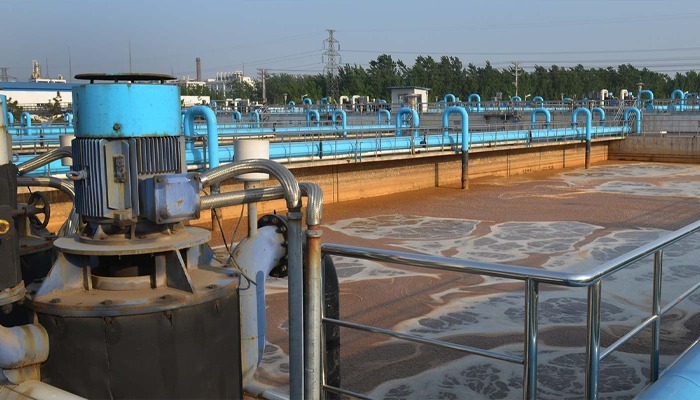
Manufacturing plants, textile units, food processing facilities, and chemical industries all produce effluent that cannot legally or safely be released untreated. Such a system typically combines physical, chemical, and biological processes to remove suspended solids, oils, heavy metals, and organic pollutants before water re-enters the environment.
Al Khabeer designs these systems around each client’s specific effluent load, ensuring compliance with local environmental regulations while keeping operational costs manageable. Modular plant designs also allow factories to scale treatment capacity as production grows, without needing a full system replacement.
Sewage Treatment Plant in Nigeria: Safe, Reusable Water for Estates and Institutions
Residential estates, hotels, schools, and hospitals generate continuous volumes of domestic sewage that require reliable, low-maintenance treatment. A well-designed facility not only prevents contamination of groundwater and surface water but can also produce treated water suitable for irrigation and landscaping — turning a waste stream into a usable resource.
Al Khabeer’s sewage treatment systems are engineered for consistent performance even during power fluctuations and variable load conditions, which are common realities across many Nigerian sites. Automated monitoring further reduces the burden on facility staff, flagging issues before they become costly failures.
Grey Water Treatment in Nigeria: Reducing Water Waste at the Source
Grey water — wastewater from sinks, showers, and laundry — makes up a significant share of daily water use in hotels, apartment complexes, and commercial buildings. Once filtered, it can be reused for toilet flushing, gardening, and cooling systems, significantly cutting overall water consumption and utility costs.
Given Nigeria’s growing focus on sustainable building practices, more developers are now specifying grey water recycling at the design stage rather than treating it as an afterthought. Al Khabeer supports this shift with compact systems suited to both new builds and retrofit projects.
Reverse Osmosis in Nigeria: Purity for Sensitive Applications
For industries where water purity directly affects product quality — pharmaceuticals, bottling, electronics, and laboratories — this technology has become the standard purification method. RO systems remove dissolved salts, minerals, and microscopic contaminants by forcing water through a semi-permeable membrane, delivering consistently high purity levels.
Al Khabeer supplies RO systems ranging from compact commercial units to large industrial installations, each configured to match local feed-water quality. Because raw water conditions vary significantly across Nigerian states, every RO in Nigeria project begins with detailed water testing to correctly size membranes and pre-treatment stages, avoiding premature fouling and unnecessary maintenance costs.
Water Purification in Nigeria: Meeting the Demand for Safe Drinking Water
Access to consistently safe drinking water remains a priority across Nigerian households, offices, and public institutions. A comprehensive purification process typically layers multiple treatment stages — sediment filtration, activated carbon, UV disinfection, and RO — to address the specific mix of turbidity, bacteria, and dissolved solids found in local water sources.
Al Khabeer builds purification systems for both large-scale institutional use and smaller commercial setups, ensuring clients get a solution matched to their actual water quality rather than an oversized, unnecessarily expensive system.
Deionizer in Nigeria: Ultra-Pure Water for Precision Industries
Certain industrial processes — including power generation, electronics manufacturing, and laboratory research — require water with virtually zero mineral content. Such a system uses ion-exchange resins to strip dissolved ions from water, producing ultra-pure output that standard filtration or even RO alone cannot achieve.
Al Khabeer’s deionization systems are often paired with RO as a final polishing stage, giving clients a two-stage purity guarantee for the most sensitive applications. Resin regeneration schedules are planned around each client’s usage volume, keeping the system efficient without excessive downtime.
Why Businesses Choose Al Khabeer Water Treatment LLC
- Custom-engineered systems — every plant is sized to actual water chemistry and demand, not guesswork
- Full-spectrum expertise — from effluent and sewage treatment to RO and deionization under one provider
- Regulatory compliance support — systems designed to meet Nigerian environmental discharge standards
- Scalable designs — modular plants that grow alongside a client’s operations
- Ongoing maintenance — proactive monitoring that catches problems before they cause downtime
For facility managers and business owners across Nigeria, working with a single, technically capable partner for both wastewater treatment and water purification simplifies vendor management and improves long-term system reliability.
Frequently Asked Questions
Q1. What industries typically need this kind of industrial wastewater system? Manufacturing, textiles, food processing, and chemical industries are the most common users, since their wastewater contains pollutants that must be treated before discharge.
Q2. How is a sewage treatment plant different from an effluent treatment plant? Sewage treatment handles domestic wastewater from sinks, toilets, and drains, while effluent treatment targets industrial process water, which often contains different and more concentrated contaminants.
Q3. Can grey water really be reused safely? Yes. Once filtered and treated, grey water is commonly reused for irrigation, toilet flushing, and cooling systems, reducing overall freshwater demand.
Q4. What is the difference between RO and deionized water? Reverse osmosis removes most dissolved salts and contaminants using a membrane, while deionization uses ion-exchange resins to remove virtually all remaining ions, producing an even higher level of purity.
Q5. Does Al Khabeer offer maintenance after installation? Yes. Al Khabeer Water Treatment LLC provides ongoing monitoring and maintenance plans to keep systems running efficiently long after commissioning.
Final Thoughts
As Nigerian industries and cities continue to expand, the pressure on water resources will only increase. Al Khabeer Water Treatment LLC offers a complete answer to this challenge — covering effluent treatment, sewage treatment, grey water recycling, reverse osmosis, water purification, and deionization under one technically driven roof, helping clients treat water responsibly without compromising on re