









Heart diseases are among the leading health concerns worldwide, and early diagnosis plays a crucial role in preventing serious complications. When patients experience symptoms such as chest pain, shortness of breath, or irregular heartbeat, doctors may recommend procedures like angiography or angioplasty. Although these terms sound similar, they serve very different purposes.
Many people often confuse angiography with angioplasty. Understanding the difference between these two cardiac procedures can help patients make informed decisions about their heart health. In this article, we will explain angiography and angioplasty, their purposes, benefits, risks, and when each procedure may be required.
What Is Angiography?
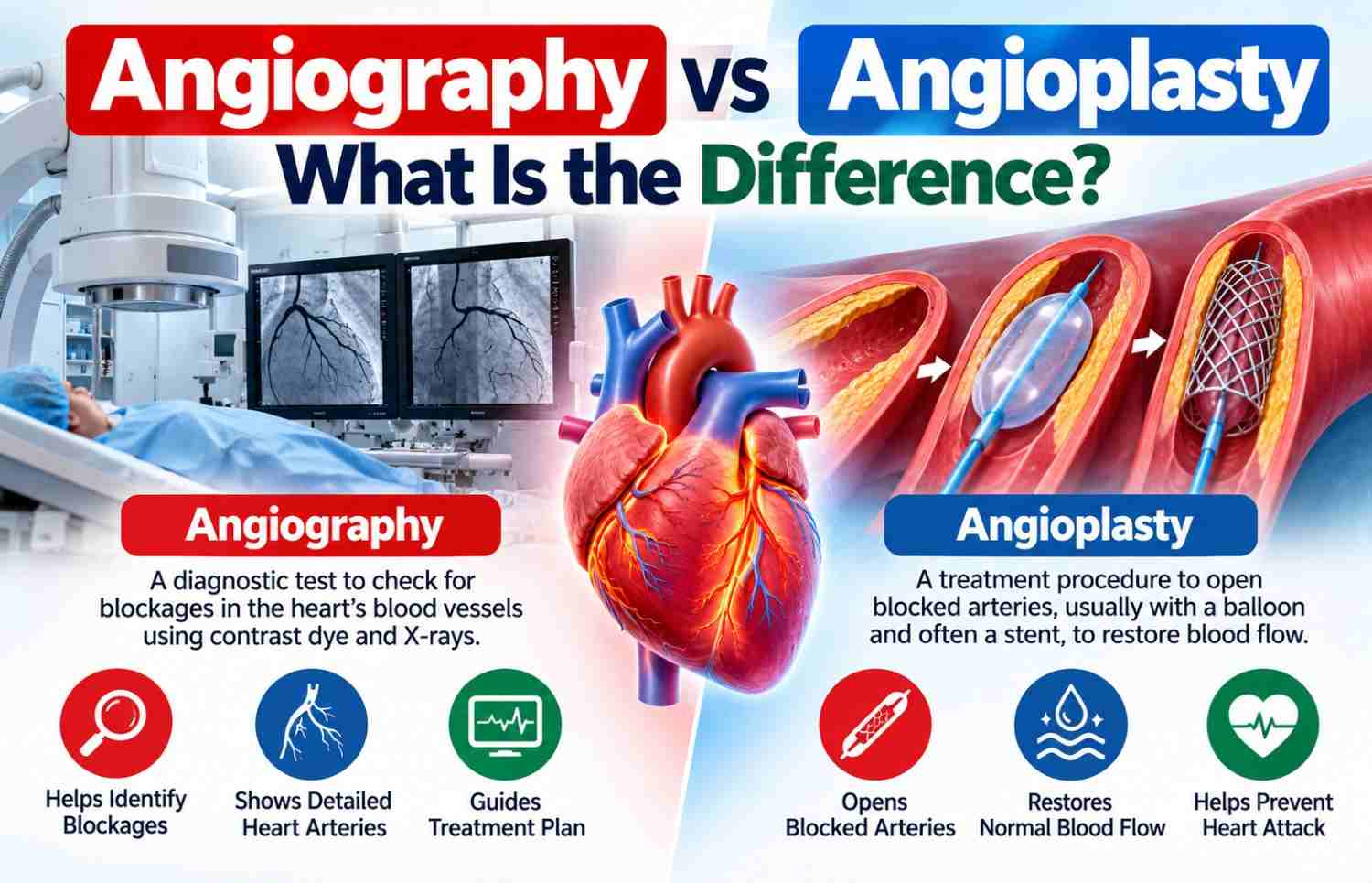
Angiography is a diagnostic procedure used to examine the blood vessels of the heart. It helps doctors identify blockages, narrowing, or abnormalities in the coronary arteries that supply blood to the heart muscle.
During an angiography, a thin tube called a catheter is inserted through an artery, usually in the wrist or groin, and guided toward the heart. A special contrast dye is then injected into the arteries. X-ray images are taken to visualize blood flow and detect any obstructions.
Purpose of Angiography
The primary goal of angiography is diagnosis. It helps cardiologists:
- Detect blocked or narrowed coronary arteries
- Identify the severity of heart disease
- Investigate causes of chest pain
- Evaluate blood flow to the heart
- Plan future treatments such as angioplasty or bypass surgery
When Is Angiography Recommended?
Your doctor may recommend angiography if you have:
- Persistent chest pain (angina)
- Abnormal ECG or stress test results
- Symptoms of coronary artery disease
- Shortness of breath during physical activity
- Suspected heart attack
What Is Angioplasty?
Angioplasty is a treatment procedure used to open blocked or narrowed arteries and restore normal blood flow to the heart.
Unlike angiography, which is performed for diagnosis, angioplasty is done to treat the blockage discovered during diagnostic testing.
During angioplasty, a catheter with a small balloon at its tip is inserted into the affected artery. The balloon is inflated at the blockage site to widen the artery. In most cases, a stent (a small metal mesh tube) is placed to keep the artery open and prevent future narrowing.
Purpose of Angioplasty
The main objective of angioplasty is treatment. It helps:
- Improve blood flow to the heart
- Relieve chest pain
- Reduce symptoms of coronary artery disease
- Minimize the risk of heart attack
- Improve quality of life
When Is Angioplasty Recommended?
Angioplasty may be recommended when:
- Significant artery blockage is detected
- A patient is experiencing a heart attack
- Medications are not effectively controlling symptoms
- Blood flow to the heart is severely restricted
Angiography vs Angioplasty: Key Differences
Understanding the distinction between these procedures is important for patients and their families.
| Feature | Angiography | Angioplasty |
|---|---|---|
| Purpose | Diagnostic | Treatment |
| Procedure Type | Imaging Test | Interventional Procedure |
| Goal | Identify blockages | Remove or reduce blockages |
| Use of Stent | No | Usually Yes |
| Recovery Time | Usually a few hours | May require 1–2 days observation |
| Outcome | Diagnosis of heart condition | Restoration of blood flow |
In simple terms, angiography helps doctors find the problem, while angioplasty helps fix it.
Can Angiography and Angioplasty Be Done Together?
Yes. In many cases, both procedures are performed during the same session.
For example, if angiography reveals a significant blockage in a coronary artery, the cardiologist may immediately proceed with angioplasty to restore blood flow. This approach can save time and reduce the need for additional hospital visits.
However, the decision depends on several factors, including the patient’s condition, the location of the blockage, and overall health status.
Also Read: Best Ayurvedic Clinic in Lucknow: Meet the Top Ayurvedic Doctor for Natural Healing
Benefits of Angiography
Angiography offers several advantages:
Accurate Diagnosis
It provides a clear and detailed view of coronary arteries, helping doctors identify the exact location and severity of blockages.
Early Detection
Heart problems can often be detected before they become life-threatening.
Better Treatment Planning
The results help cardiologists determine whether medications, angioplasty, or surgery is the most appropriate treatment option.
Benefits of Angioplasty
Angioplasty has transformed the treatment of coronary artery disease.
Quick Restoration of Blood Flow
The procedure rapidly improves circulation to the heart muscle.
Relief from Symptoms
Patients often experience significant relief from chest pain and breathing difficulties.
Reduced Risk of Heart Attack
Opening blocked arteries can lower the risk of future cardiac events.
Faster Recovery
Compared to open-heart surgery, angioplasty generally involves a shorter recovery period.
Are There Any Risks?
Like any medical procedure, both angiography and angioplasty carry certain risks.
Risks of Angiography
- Bleeding at the catheter insertion site
- Allergic reaction to contrast dye
- Infection (rare)
- Temporary kidney issues
Risks of Angioplasty
- Re-narrowing of the artery
- Blood clot formation
- Bleeding
- Damage to blood vessels
- Heart rhythm disturbances
Fortunately, serious complications are uncommon when procedures are performed by experienced cardiologists.
How to Prepare for These Procedures
Patients may be advised to:
- Avoid eating or drinking for several hours before the procedure
- Inform the doctor about current medications
- Discuss any allergies, especially to contrast dye
- Arrange transportation after discharge
Following medical instructions carefully can help ensure a smooth procedure and recovery.
Why Expert Cardiac Care Matters
Heart-related procedures require precise diagnosis and expert intervention. Choosing an experienced cardiologist can significantly improve outcomes and patient confidence.
If you are experiencing symptoms of heart disease, consulting Dr. Deepak Verma, a renowned heart specialist in Gorakhpur, can help you receive timely evaluation and treatment. Known by many patients as the best cardiologist in Gorakhpur, Dr. Deepak Verma specializes in the diagnosis and management of various cardiac conditions, including coronary artery disease, heart attacks, and complex interventional procedures.
Conclusion
While angiography and angioplasty are closely related procedures, they serve different purposes. Angiography is a diagnostic test used to identify blockages in the coronary arteries, whereas angioplasty is a treatment procedure designed to open those blockages and restore healthy blood flow.
Understanding the difference can help patients feel more confident when discussing treatment options with their healthcare provider. If you experience symptoms such as chest pain, shortness of breath, or unexplained fatigue, seek medical attention promptly. Early diagnosis and timely treatment can make a significant difference in protecting your heart and overall health.
For expert cardiac consultation and advanced heart care, consider consulting Dr. Deepak Verma, a trusted heart specialist in Gorakhpur and widely recognized as one of the best cardiologists in Gorakhpur.