





The technician tests a smoke detector on the second floor, but the fire alarm panel identifies it as being on the third. The detector has responded, yet the security team would be sent to the wrong place. That’s the kind of issue a fire alarm maintenance visit can uncover. The technician checks what happens from the moment a device is activated to the moment the warning reaches the people who need to hear it.
If you manage an office in Sector 62, a commercial building in Sector 18 or a factory in Phase II, here’s what to expect during a visit and what to ask for before the technician leaves.
-
The technician reviews the site and plans the tests
The visit usually starts with a conversation with the facility or security team. The technician reviews the previous service report, recent fault messages and any unwanted alarms. If the alarm tends to go off when a particular kitchen opens or work begins on a renovated floor, share the time and location. Those details give the technician somewhere to start.
Keep the fire alarm logbook, floor plans or zone chart, and keys to locked rooms ready. Mention recent changes such as a new partition, a relocated pantry or a storage room that now has taller racks. These changes can affect where detectors need to pick up smoke or where the alarm can be heard.
Agree on a test window with the technician and tell security, reception and affected tenants when audible testing will take place. If the building uses a remote monitoring service, coordinate with the operator before and after the test. It also helps to arrange an escort for areas with restricted access, such as server rooms or tenant offices.
-
The fire alarm control panel and backup power are checked
The control panel is where the security team looks first when the alarm goes off. The technician checks what the panel is showing before testing starts. Depending on the system, this may include power and battery indicators, active faults, disabled zones or devices, and recent events stored in the panel. Where there’s a repeater panel at another entrance or security desk, that display can be checked too.
The technician also checks the backup batteries and their connections. Where a backup power test is due, they verify that the panel continues operating on battery power when its normal supply is interrupted under controlled conditions.
Ask the technician to show you any fault that was already present when they arrived. A message that appears repeatedly is easier to investigate when the team can explain when it started and whether it comes and goes.
-
Smoke detectors, heat detectors and manual call points are tested
The technician walks the areas included in the visit and checks the condition of the devices. A detector may be dusty after ceiling work, or a manual call point may have ended up behind a cabinet. If cleaning is needed, the technician follows the manufacturer’s instructions for that device.
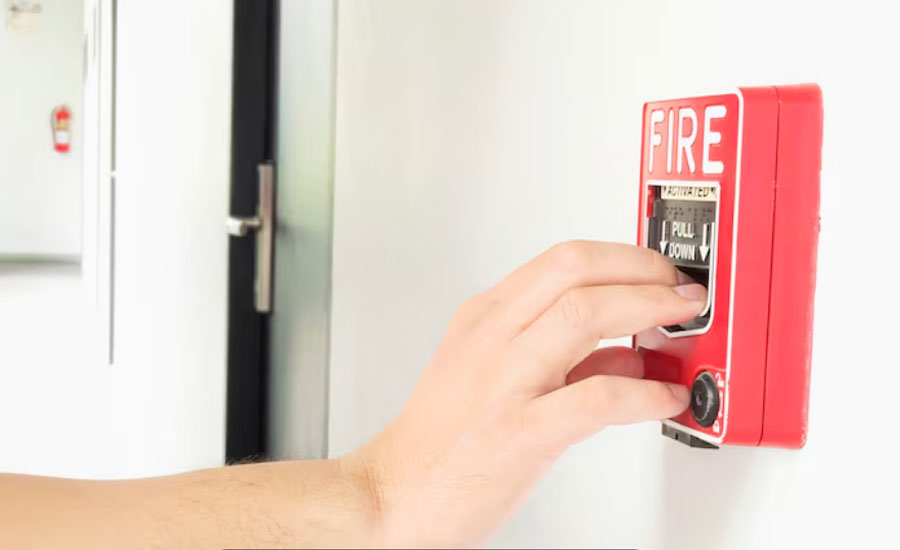
The functional test checks whether the device can trigger the expected response. The technician uses equipment suited to the detector type and, for a manual call point, the appropriate test method for that model. As each device is tested, the technician checks the signal at the control panel. A conventional panel typically identifies the zone. An addressable panel can identify the individual device, so the technician can compare the location shown on the screen with the device’s actual location.
Ask which floors and devices were tested during the visit. If the team couldn’t enter a locked suite or reach a detector above a false ceiling, have that area listed in the report and arrange access for the follow-up.
-
Sounders and other warning devices are checked
When the alarm test starts, the technician checks that the sounders, often called hooters, operate where expected. Where the building has flashing beacons or a voice evacuation system, the agreed tests may also cover whether the lights flash or the correct announcement plays in the intended area.
This is a good time to tell the technician where staff have trouble hearing the alarm. It may be clear in the lift lobby but hard to hear in a meeting room with the door closed or on a shop floor with machinery running. Share the exact location and the conditions at the time so the technician can investigate.
Some buildings also have systems that respond automatically to a fire alarm, such as magnetic door holders or ventilation controls. If these are part of the visit, the technician coordinates with the relevant building teams and checks that the connected equipment responds as designed.
-
The system is restored and the findings are handed over
At the end of the visit, the technician resets the panel, restores any functions temporarily isolated for testing and confirms that remote monitoring is back in normal service, where applicable. If a device, zone or connected function remains impaired, make sure the technician tells the facility manager and security team before leaving. Ask which area is affected and agree on the interim arrangements and repair follow-up.
A useful service report records:
- The floors, zones and devices covered during the visit.
- The results of the panel, battery, detector, call point and sounder checks performed.
- Any areas or devices the technician couldn’t test, with the reason.
- Faults found, work completed and repairs or replacement parts still required.
- The system’s status at handover and the next action for open issues.
Keep the report with the building’s fire alarm logbook. If the same detector triggers another unwanted alarm a few weeks later, your team can see what was checked, whether it was cleaned or replaced, and what still needs investigation.
Planning a fire alarm maintenance visit in Noida?
When you contact Innovative Fire Protection, share the type of property, the number of floors and the panel make or model if you have it. Mention any recurring faults, recent renovations or access restrictions when discussing the visit. That gives the technician a clearer picture of the site and helps you agree on what will be tested and what your team should have ready.