








Stroke is one of the leading causes of disability worldwide, affecting millions of people every year. While emergency treatment and rehabilitation remain the cornerstone of recovery, many patients and caregivers are now exploring advanced therapies that may support healing and improve quality of life. One such treatment gaining attention is Hyperbaric Oxygen Therapy (HBOT).
But can HBOT really help in stroke recovery? What does the science say, and why are more patients in Lucknow considering this therapy as part of their rehabilitation journey?
In this article, experts from HBOT Lucknow explain how Hyperbaric Oxygen Therapy works, its potential benefits after a stroke, and what patients should know before starting treatment.
Understanding Stroke and Its Impact
A stroke occurs when blood flow to a part of the brain is interrupted, depriving brain cells of oxygen and nutrients. This can happen due to a blocked artery (ischemic stroke) or a ruptured blood vessel (hemorrhagic stroke).
Depending on the severity and location of the stroke, patients may experience:
- Weakness or paralysis on one side of the body
- Difficulty speaking or understanding language
- Memory and cognitive problems
- Loss of balance and coordination
- Vision disturbances
- Emotional and behavioral changes
Traditional stroke recovery typically involves medications, physiotherapy, occupational therapy, speech therapy, and lifestyle modifications. However, recovery can sometimes be slow, prompting patients to seek complementary therapies that may support brain healing.
What Is Hyperbaric Oxygen Therapy (HBOT)?
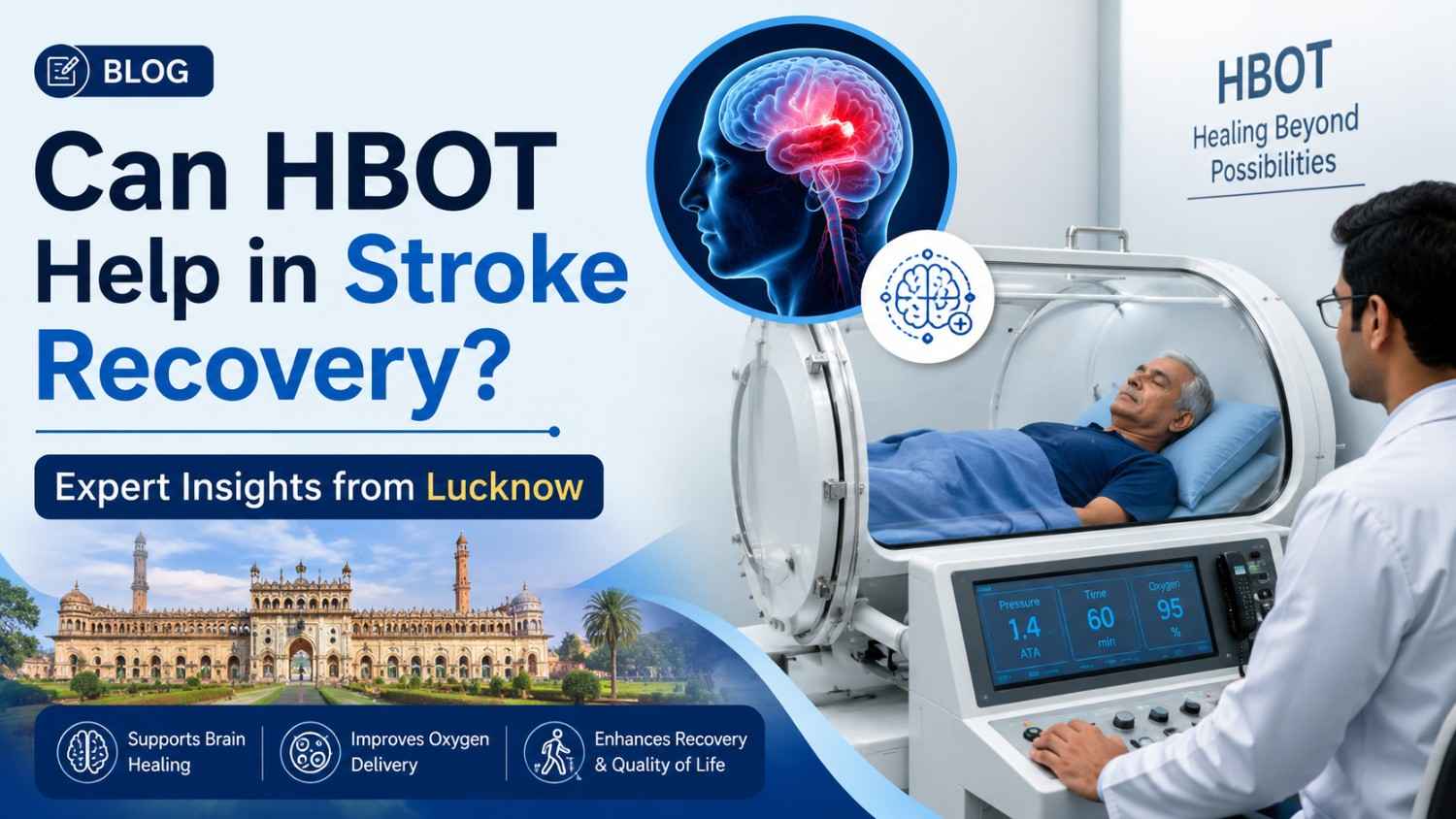
Hyperbaric Oxygen Therapy is a non-invasive treatment in which a patient breathes 100% pure oxygen inside a specially designed pressurized chamber.
Under increased atmospheric pressure, oxygen dissolves more effectively into the bloodstream and reaches tissues that may not receive adequate oxygen under normal conditions.
This enhanced oxygen delivery may help:
- Improve tissue repair
- Reduce inflammation
- Support blood vessel formation
- Promote cellular recovery
- Enhance neurological healing processes
HBOT has been widely used for conditions such as decompression sickness, non-healing wounds, carbon monoxide poisoning, and radiation injuries. Its potential role in neurological recovery has attracted significant interest in recent years.
How HBOT May Support Stroke Recovery
After a stroke, some brain cells die permanently due to oxygen deprivation. However, surrounding areas of the brain often contain injured but still viable cells known as the “penumbra.”
These cells may have reduced function but retain the potential to recover under favorable conditions.
HBOT may support recovery through several mechanisms.
1. Increased Oxygen Supply to Brain Tissue
The primary benefit of HBOT is enhanced oxygen delivery.
Stroke-damaged brain tissue often suffers from poor oxygenation. By increasing oxygen levels in the blood, HBOT may help provide the nutrients and oxygen needed for cellular repair and recovery.
Also Read: The Future of Modern Architecture in the UAE Sustainability and Luxury
2. Reduction of Brain Inflammation
Inflammation is a natural response to injury, but excessive inflammation can slow recovery.
Research suggests that HBOT may help reduce inflammatory processes in the brain, potentially creating a more favorable environment for healing.
3. Promotion of Neuroplasticity
Neuroplasticity refers to the brain’s ability to reorganize and form new neural connections.
HBOT may stimulate neuroplastic changes, helping healthy areas of the brain take over functions lost due to stroke damage.
4. Improved Blood Vessel Formation
HBOT has been shown to encourage angiogenesis, the formation of new blood vessels.
Better blood circulation may improve oxygen and nutrient delivery to damaged brain regions, supporting long-term recovery.
5. Enhanced Cellular Repair
Hyperbaric oxygen can activate various growth factors and stem-cell-related mechanisms that may contribute to tissue regeneration and healing.
What Does Research Say About HBOT for Stroke Patients?
Scientific research on HBOT for stroke recovery continues to evolve.
Several studies have reported improvements in:
- Cognitive function
- Speech abilities
- Motor skills
- Balance and coordination
- Daily living activities
Researchers believe that increased oxygen availability may reactivate dormant neurons and improve the function of partially damaged brain tissue.
While results vary among individuals, many stroke survivors have reported meaningful improvements when HBOT is integrated into a comprehensive rehabilitation program.
It is important to note that HBOT should not replace standard stroke treatment but may be considered as an adjunct therapy under professional supervision.
Which Stroke Patients May Benefit from HBOT?
HBOT may be considered for patients experiencing:
- Persistent weakness after stroke
- Difficulty walking
- Speech and language impairments
- Cognitive decline
- Memory problems
- Reduced concentration
- Long-term neurological deficits
Both recent and chronic stroke survivors may explore HBOT depending on their medical condition and treatment goals.
A thorough medical evaluation is essential before beginning therapy.
What Happens During an HBOT Session?
Patients often feel anxious before their first HBOT session, but the procedure is generally comfortable and painless.
A typical session includes:
Initial Assessment
A healthcare professional reviews the patient’s medical history, stroke condition, and rehabilitation goals.
Chamber Treatment
The patient enters a hyperbaric chamber where atmospheric pressure is gradually increased.
During treatment, the patient breathes pure oxygen while relaxing, reading, or resting.
Session Duration
Most sessions last between 60 and 90 minutes, depending on the treatment plan.
Multiple Sessions
Stroke recovery usually requires a series of HBOT sessions. The exact number varies based on individual needs and physician recommendations.
Benefits Reported by Stroke Survivors
Many patients undergoing HBOT as part of their rehabilitation have reported improvements such as:
- Better muscle control
- Enhanced speech clarity
- Increased energy levels
- Improved memory and concentration
- Better balance and coordination
- Greater independence in daily activities
While outcomes differ from person to person, these reported benefits continue to drive interest in HBOT-based neurological rehabilitation.
HBOT and Rehabilitation: A Combined Approach
Experts emphasize that the best results are often achieved when HBOT is combined with traditional rehabilitation therapies.
This may include:
- Physiotherapy
- Occupational therapy
- Speech therapy
- Cognitive rehabilitation
- Nutritional support
- Lifestyle modifications
The increased oxygen delivery provided by HBOT may help the brain respond more effectively to these rehabilitation efforts.
Is HBOT Safe for Stroke Patients?
When administered by trained professionals, HBOT is generally considered safe.
Most patients tolerate treatment well. Temporary side effects may include:
- Ear pressure or discomfort
- Mild fatigue
- Temporary vision changes
- Sinus discomfort
Serious complications are rare when proper safety protocols are followed.
Before starting therapy, patients should undergo a detailed medical assessment to determine suitability and minimize risks.
Why Patients Are Choosing HBOT in Lucknow
Lucknow is emerging as a center for advanced rehabilitation therapies, including Hyperbaric Oxygen Therapy.
Patients from nearby cities are increasingly seeking treatment options that go beyond conventional rehabilitation methods.
Many individuals looking for specialized oxygen therapy solutions also explore services such as HBOT in Kanpur and HBOT in Varanasi, reflecting the growing awareness of HBOT across North India.
With advancements in hyperbaric technology and increased clinical experience, patients now have greater access to supportive recovery options closer to home.
Expert Perspective from HBOT Lucknow
At HBOT Lucknow, specialists believe that stroke recovery should be approached holistically.
Every stroke survivor has unique challenges and recovery goals. HBOT is not a miracle cure, but it may provide valuable support by enhancing oxygen delivery, encouraging brain healing, and complementing rehabilitation therapies.
A personalized treatment plan, guided by experienced professionals, is essential for achieving the best possible outcomes.
Patients seeking advanced neurological rehabilitation options often inquire about HBOT in Kanpur and HBOT in Varanasi, but many are now recognizing Lucknow as a trusted destination for comprehensive Hyperbaric Oxygen Therapy services.
Conclusion
Stroke recovery can be a long and challenging journey, but advances in medical technology are creating new possibilities for rehabilitation. Hyperbaric Oxygen Therapy has emerged as a promising supportive treatment that may help improve neurological function, promote healing, and enhance quality of life for stroke survivors.
Although HBOT should not replace conventional stroke care, it may serve as a valuable addition to a comprehensive recovery program. By increasing oxygen availability to damaged brain tissue and supporting neuroplasticity, HBOT offers hope to many individuals striving for better recovery outcomes.
If you or a loved one is exploring innovative rehabilitation options, consulting the experts at HBOT Lucknow can help determine whether Hyperbaric Oxygen Therapy may be a suitable part of your stroke recovery journey.