









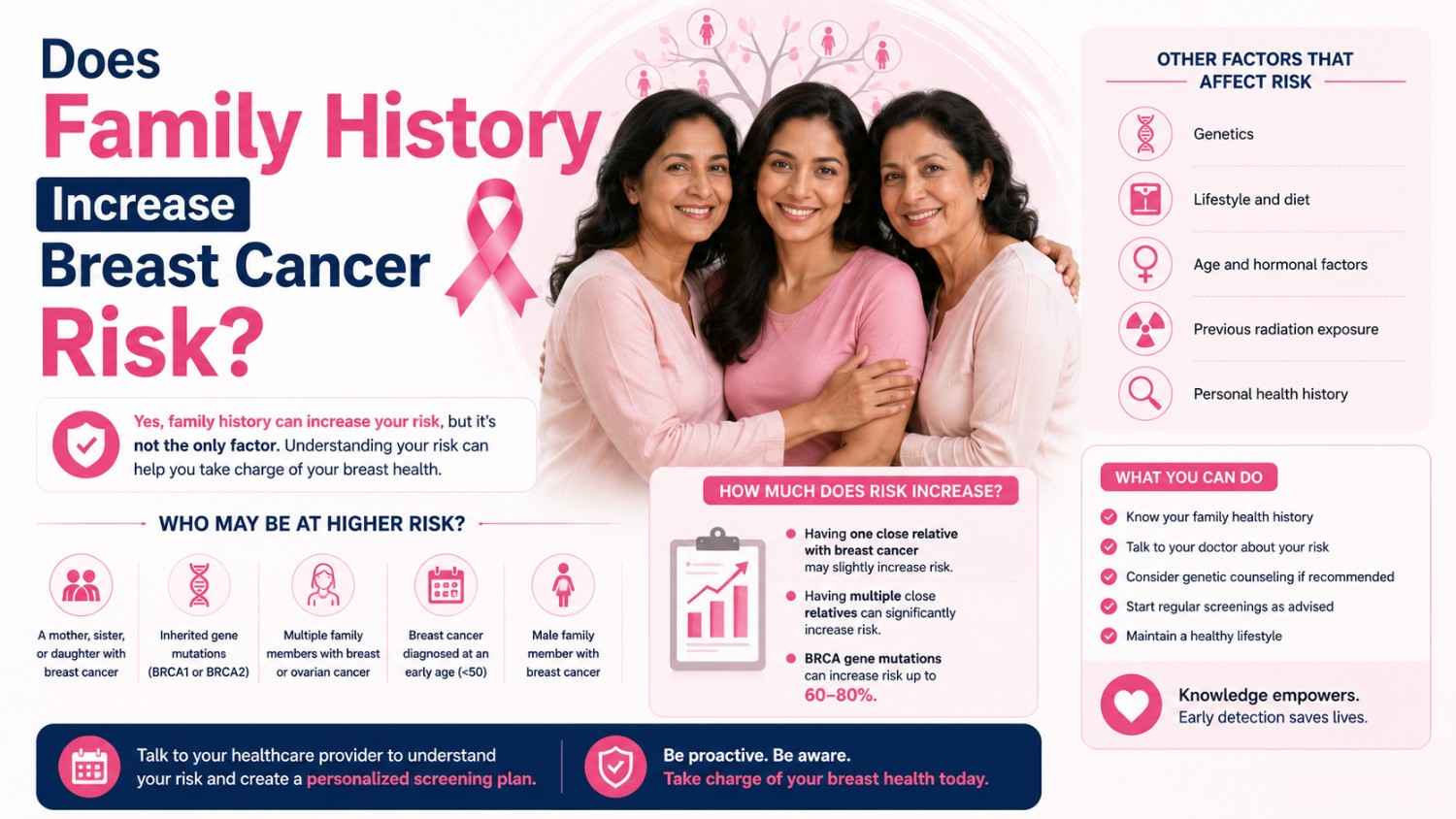
Breast cancer is one of the most common cancers affecting women worldwide. While many factors can contribute to the development of breast cancer, family history remains one of the most discussed and important risk factors. If your mother, sister, aunt, or grandmother has been diagnosed with breast cancer, you may wonder whether you are also at a higher risk.
The answer is yes—having a family history of breast cancer can increase your risk. However, it does not mean that you will definitely develop the disease. Understanding how genetics and family history influence breast cancer can help you take proactive steps toward early detection and prevention.
In this article, Dr. Kamlesh Verma, a leading breast cancer surgeon in Lucknow, explains the connection between family history and breast cancer risk, the role of genetic mutations, and how women can protect their health through regular screening and awareness.
What Does Family History Mean in Breast Cancer?
Family history refers to having one or more blood relatives who have been diagnosed with breast cancer or related cancers such as ovarian cancer.
These relatives may include:
- Mother
- Sister
- Daughter
- Grandmother
- Aunt
- Cousin
The closer the relationship and the greater the number of affected family members, the higher the potential risk.
For example, a woman whose mother or sister has had breast cancer generally has a higher risk than someone whose distant relative was diagnosed with the disease.
How Much Does Family History Increase Breast Cancer Risk?
Research suggests that:
- Women with one first-degree relative (mother, sister, or daughter) diagnosed with breast cancer have approximately twice the risk of developing breast cancer.
- Women with two or more first-degree relatives affected by breast cancer may have an even greater risk.
- The risk is higher if the family member was diagnosed at a younger age, especially before menopause.
However, it is important to understand that most women diagnosed with breast cancer do not have a strong family history of the disease.
Also Read: Best Advocates in Dubai – Professional Legal Services by Aljasmilaw
The Role of Genetics in Breast Cancer
Family history often reflects shared genetic factors. Certain inherited gene mutations can significantly increase breast cancer risk.
The most well-known genes are:
BRCA1 Gene Mutation
Women carrying a BRCA1 mutation have a substantially higher lifetime risk of developing breast cancer and ovarian cancer.
BRCA2 Gene Mutation
BRCA2 mutations also increase the likelihood of breast cancer and may affect both women and men.
These genetic mutations can be passed from parents to children and may run through multiple generations.
Signs That Breast Cancer May Be Hereditary
Breast cancer may have a hereditary component if:
- Multiple family members have breast cancer
- Breast cancer occurs before age 50
- A family history of ovarian cancer exists
- Male breast cancer is present in the family
- One person develops cancer in both breasts
- Several generations are affected
Women with these patterns should consider discussing genetic counseling and testing with a specialist.
Does Having No Family History Mean You Are Safe?
No.
Many women mistakenly believe that they cannot develop breast cancer if nobody in their family has had the disease.
In reality:
- Around 70–80% of breast cancer cases occur in women with no significant family history.
- Lifestyle factors, age, hormonal changes, obesity, and environmental influences can also contribute to risk.
This is why regular screening remains essential for all women, regardless of family history.
Other Factors That Increase Breast Cancer Risk
While family history is important, several other factors may also contribute to breast cancer development.
Increasing Age
The risk of breast cancer increases as women grow older, especially after age 40.
Hormonal Factors
Long-term exposure to estrogen can increase risk.
Examples include:
- Early menstruation
- Late menopause
- Hormone replacement therapy
Obesity
Being overweight, particularly after menopause, can increase breast cancer risk.
Lack of Physical Activity
A sedentary lifestyle may contribute to hormonal changes associated with cancer development.
Alcohol Consumption
Studies have shown a link between alcohol intake and increased breast cancer risk.
Previous Breast Conditions
Certain non-cancerous breast conditions may increase the likelihood of developing breast cancer later.
Should You Get Genetic Testing?
Genetic testing is not necessary for everyone. However, it may be recommended if:
- Multiple family members have breast cancer
- Breast cancer occurs at a young age in the family
- There is a family history of ovarian cancer
- Male breast cancer exists in the family
- A known BRCA mutation is present in relatives
A healthcare professional can evaluate your personal and family history and determine whether genetic testing is appropriate.
How Can Women With a Family History Reduce Their Risk?
Although inherited risk cannot be changed, there are several steps women can take to improve early detection and reduce overall risk.
1. Perform Regular Breast Self-Examinations
Women should become familiar with the normal appearance and feel of their breasts.
Watch for:
- New lumps
- Breast thickening
- Nipple discharge
- Skin dimpling
- Changes in breast shape
Any unusual changes should be evaluated by a breast specialist.
2. Schedule Regular Clinical Breast Exams
Professional breast examinations can help identify abnormalities that may not be noticed during self-checks.
3. Follow Mammography Recommendations
Women with a strong family history may need screening earlier than the general population.
Mammograms can detect breast cancer before symptoms appear.
4. Maintain a Healthy Weight
A balanced diet and regular exercise can help reduce several cancer-related risk factors.
5. Limit Alcohol and Avoid Smoking
Healthy lifestyle choices support overall breast health and may reduce cancer risk.
When Should Women With a Family History Start Screening?
Screening recommendations vary depending on individual risk factors.
Generally:
- Average-risk women are often advised to begin mammography around age 40.
- Women with a strong family history may require earlier screening.
- Additional imaging such as breast MRI may be recommended for high-risk individuals.
Consulting an experienced breast cancer specialist is the best way to create a personalized screening plan.
Importance of Early Detection
Early detection remains one of the most powerful tools in the fight against breast cancer.
When diagnosed in its early stages:
- Treatment options are often less aggressive.
- Survival rates are significantly higher.
- Recovery outcomes are generally better.
Women with a family history should not live in fear but should remain informed and proactive about their health.
Expert Breast Cancer Care in Lucknow
If you have concerns about your family history or breast cancer risk, professional guidance can make a significant difference.
Dr. Kamlesh Verma, a trusted breast cancer surgeon in Lucknow, provides comprehensive breast cancer screening, diagnosis, counseling, and treatment through CareMyCancer. With a patient-focused approach and advanced treatment options, he helps women understand their risk factors and make informed healthcare decisions.
Conclusion
Family history can increase the risk of breast cancer, especially when close relatives are affected or hereditary gene mutations such as BRCA1 and BRCA2 are involved. However, having a family history does not guarantee that breast cancer will occur, and having no family history does not eliminate risk.
The key is awareness, regular screening, healthy lifestyle choices, and timely consultation with a breast cancer specialist. Understanding your family history allows you to take control of your health and detect potential problems at the earliest stage.
If you have a family history of breast cancer or need expert guidance regarding breast health, consult Dr. Kamlesh Verma at CareMyCancer, Lucknow, for personalized screening and treatment recommendations.