








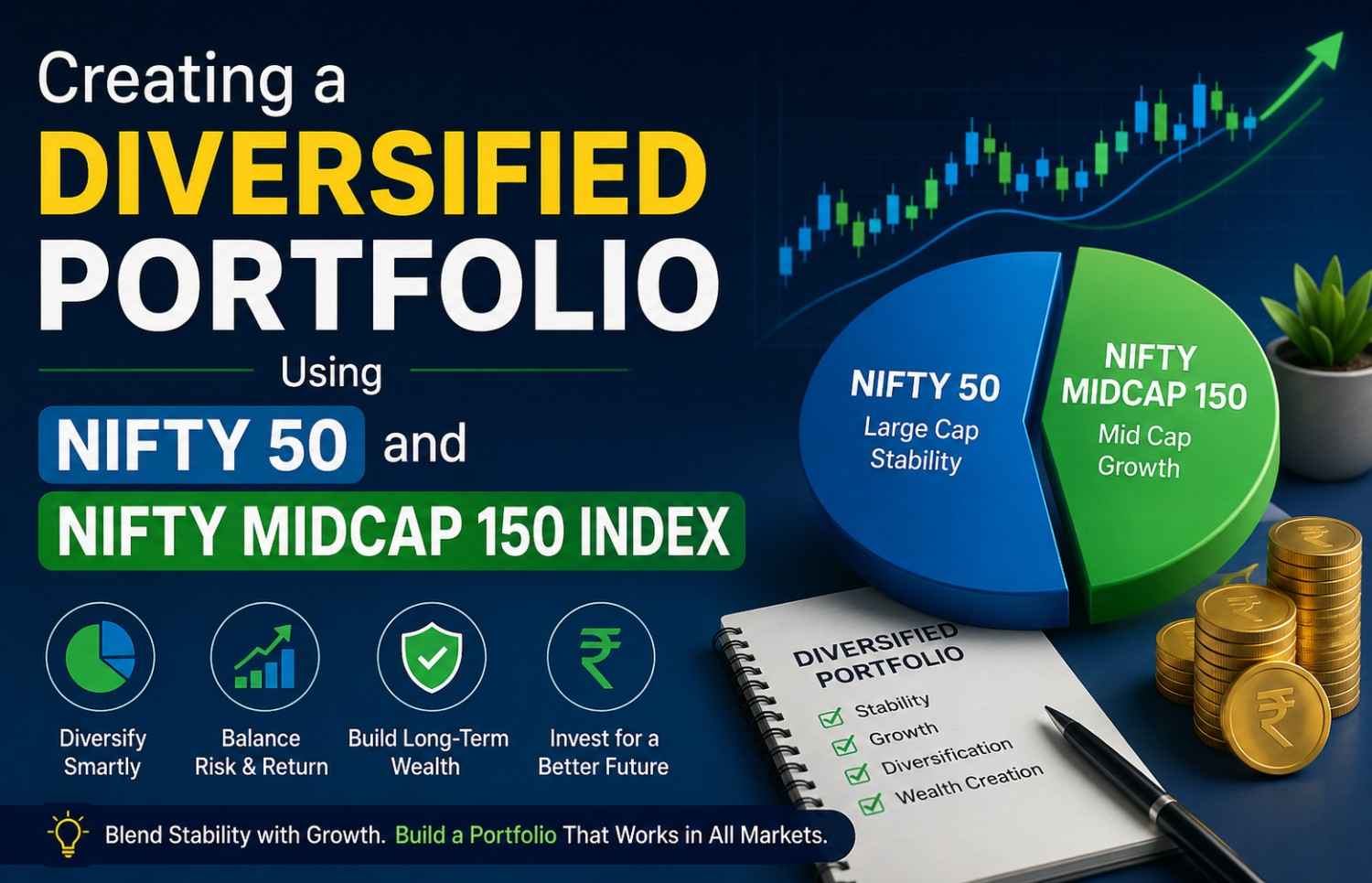
Two indices can both track shares and still behave very differently. Nifty 50 and Nifty Midcap 150 sit in different parts of the market. They therefore carry different mixes of company size, business maturity and price movement. The choice is not only about which index has delivered more in a past period. It is also about how much change an investor can accept while waiting for potential returns.
In a large-and-mid-cap mix, a useful comparison starts with what each index owns. It then looks at risk, diversification, cost and the role the index may play in a wider portfolio.
How the two indices divide the market
The Nifty 50 tracks 50 large and liquid companies. It is often used as a core measure of the large-cap market. The Nifty Midcap 150 represents 150 companies ranked 101 to 250 by full market capitalisation within the Nifty 500. It gives broad exposure to the mid-cap segment.
This difference in membership matters. Nifty 50 may react more to the earnings and valuations of large firms with established scale and broad investor ownership. Nifty Midcap 150 may be shaped more by mid-sized firms across a wider range of industries and business stages. Even when both rise over a long period, the path may not look alike.
How their risk and potential return profiles differ
Company size often affects the way an index moves. The Nifty 50 may have deeper liquidity and a larger weight in mature companies. The Nifty Midcap 150 can show wider swings because mid-sized firms may have more earnings, funding and valuation risk.
In a large-and-mid-cap mix, that does not make one index safer in every phase. Large companies can also fall sharply. Smaller firms may at times hold up better. Yet the range of outcomes can be wider in the less mature segment. Liquidity may also be thinner, which can add to price swings during stressed markets.
In a large-and-mid-cap mix, potential returns should therefore be viewed beside the depth of declines and the time needed for recovery. A higher past return does not prove that the same pattern will continue.
What can drive performance
The two indices can respond to different forces. Large caps may lead when investors prefer liquidity or global flows return to the biggest stocks. Mid-caps may gain more when domestic demand and capital spending broaden across the economy.
In a large-and-mid-cap mix, valuation also matters. An index can contain sound businesses and still offer muted potential returns if prices already reflect very high hopes. The reverse can also occur after a weak phase. This is why a single one-year chart can give an incomplete view.
In a large-and-mid-cap mix, a broader review may include rolling returns, drawdowns, volatility and performance across full market cycles. It may also compare the total return index, which includes dividends, rather than only the price index.
Where each index may fit
Combining the two can create a large-and-mid-cap structure without relying on one market segment.
An investor who wants a core of established companies may lean towards Nifty 50. Someone who can accept higher potential growth with more interim volatility may consider measured exposure to Nifty Midcap 150. The allocation need not be an all-or-nothing call.
In a large-and-mid-cap mix, a blend can spread exposure across different stages of business growth. Still, simply owning two indices does not guarantee useful diversification. Their sector weights and top holdings should be checked. The same sector may have a large weight in both.
What to check before investing
Before choosing an index fund or exchange traded fund, it helps to check a few practical points:
- Existing exposure: A new fund should add a clear role rather than repeat what is already held.
- Investment horizon: Equity exposure usually needs time. A short goal may not allow enough time to recover from a fall.
- Risk capacity: The amount invested should match the loss an investor can bear without changing the plan in panic.
- Tracking difference: A fund may lag its index due to costs, cash holdings and execution.
- Total expense ratio: Lower costs can help, but cost alone should not decide the choice.
Regular investing may reduce the pressure of choosing one entry point. It cannot remove market risk or assure potential returns.
Conclusion
There is no fixed winner between the large-cap index and Nifty Midcap 150. The allocation between the large-cap index and the broad mid-cap index should reflect the investor’s risk capacity, not a recent performance chart. The more suitable choice is the one that fits the investor’s goal, time frame and ability to stay invested through uneven markets.
Also Read: 7 Mistakes That a BIM Execution Plan Can Prevent
Mutual Fund investments are subject to market risks, read all scheme related documents carefully.
This document should not be treated as endorsement of the views/opinions or as investment advice. This document should not be construed as a research report or a recommendation to buy or sell any security. This document is for information purpose only and should not be construed as a promise on minimum returns or safeguard of capital. This document alone is not sufficient and should not be used for the development or implementation of an investment strategy. The recipient should note and understand that the information provided above may not contain all the material aspects relevant for making an investment decision. Investors are advised to consult their own investment advisor before making any investment decision in light of their risk appetite, investment goals and horizon. This information is subject to change without any prior notice.
The content herein has been prepared on the basis of publicly available information believed to be reliable. However, Bajaj Asset Management Limited (formerly known as Bajaj Finserv Asset Management Limited) does not guarantee the accuracy of such information, assure its completeness or warrant such information will not be changed. The tax information (if any) in this article is based on prevailing laws at the time of publishing the article and is subject to change. Please consult a tax professional or refer to the latest regulations for up-to-date information.