









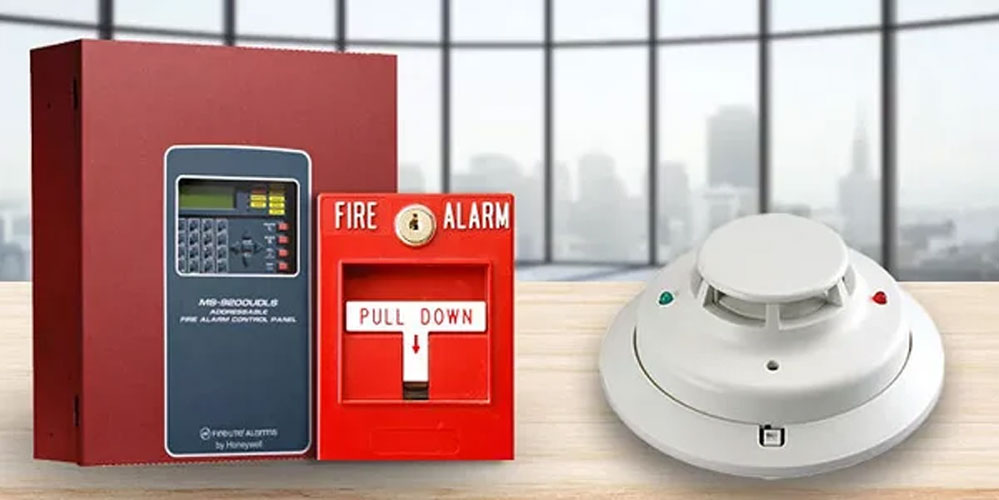
Fire safety is a critical part of protecting people, property, equipment, and business operations. Whether it is an office, factory, hospital, school, warehouse, residential society, hotel, or commercial complex, detecting a fire at the earliest possible stage can make a significant difference in how quickly occupants and emergency teams can respond.
This is why choosing a reliable Fire Alarm Manufacturer in Noida is an important decision for businesses, builders, facility managers, architects, and property owners. A well-designed fire alarm system is more than an alarm bell. It is an integrated safety solution designed to detect potential signs of fire, alert occupants, and support an organized emergency response.
Innovative Fire Protection provides fire protection solutions for different types of residential, commercial, and industrial requirements. With a focus on appropriate system selection, installation support, maintenance, and practical fire safety requirements, the aim is to help customers create safer premises.
What Is a Fire Alarm System?
A fire alarm system is a combination of detection, notification, and control devices designed to identify potential fire-related conditions and warn people inside a building.
Depending on the system design, it may detect smoke, heat, or a manually triggered emergency signal. Once a device is activated, the fire alarm control panel processes the signal and activates connected notification devices such as sounders, hooters, sirens, or visual indicators.
A typical system can include:
- Fire alarm control panel
- Smoke detectors
- Heat detectors
- Manual call points
- Hooters and sounders
- Response indicators
- Input/output modules
- Repeater panels
- Power supply and battery backup
- Cables and related accessories
The exact configuration should be selected according to the building layout, occupancy, operational risks, and applicable fire safety requirements.
Why Are Fire Alarm Systems Important?
Fire can spread rapidly, and smoke may create dangerous conditions even before flames reach occupied areas. Early warning gives occupants additional time to respond, evacuate, and initiate emergency procedures.
An appropriately planned fire alarm system can help with:
- Early Fire Detection
Smoke and heat detectors are designed to identify specific fire-related conditions at an early stage. Faster detection can support faster response.
- Timely Occupant Warning
Sounders, hooters, and other notification devices alert people when a potential emergency is detected.
- Protection of Property
Early detection can help reduce the time between the beginning of an incident and the initiation of emergency action, potentially limiting damage when an effective response follows.
- Organized Emergency Response
A properly designed system helps security teams, facility managers, employees, and occupants recognize an emergency and follow established evacuation and response procedures.
- Supporting Overall Fire Safety
Fire alarms form one part of a broader fire protection strategy that may also include fire extinguishers, hydrant systems, sprinklers, emergency lighting, signage, evacuation plans, and trained personnel.
Types of Fire Alarm Systems
When selecting a Fire Alarm Manufacturer in Noida, it is useful to understand the major system options available. Different buildings can require different technologies.
Conventional Fire Alarm System
A conventional fire alarm system divides a building into multiple zones. Detectors and manual call points are connected to individual zones, allowing the control panel to indicate the general area where an alarm has originated.
Conventional systems can be suitable for relatively small or straightforward premises where zone-level identification is sufficient.
Common applications include:
- Small offices
- Retail stores
- Schools
- Small warehouses
- Residential buildings
- Clinics
- Smaller commercial properties
Addressable Fire Alarm System
An addressable fire alarm system provides individual identification for compatible devices connected to the system. Each device can have a unique address, helping authorized personnel determine which detector, manual call point, or module has generated a signal.
This makes addressable systems particularly useful for larger or more complex premises.
Common applications include:
- Corporate offices
- Hospitals
- Hotels
- Shopping complexes
- Large factories
- Data and technology facilities
- Large educational campuses
- Multi-storey buildings
The correct choice between conventional and addressable systems depends on factors such as property size, layout, monitoring requirements, expansion plans, and fire safety design.
Major Components of a Fire Alarm System
A dependable fire alarm installation depends on several interconnected components working together.
Fire Alarm Control Panel
The control panel acts as the central monitoring and processing unit of the fire alarm system. It receives information from connected devices and initiates appropriate alarm or notification functions according to system configuration.
Smoke Detectors
Smoke detectors are designed to identify the presence of smoke based on their detection technology. They are commonly installed in offices, corridors, rooms, reception areas, and many other suitable locations.
Detector selection and positioning should always be based on the specific environment and system design.
Heat Detectors
Heat detectors respond to temperature-related conditions and can be useful in environments where smoke detectors may not be appropriate.
Depending on system requirements, fixed-temperature or rate-of-rise detection technologies may be considered.
Manual Call Points
Manual call points allow a person who notices a fire or emergency to manually activate the alarm system.
They should be installed at appropriate and easily accessible locations as determined by the fire alarm design.
Hooters and Sounders
These devices provide an audible warning during a fire alarm condition. The objective is to ensure that occupants can recognize the alarm and take appropriate action.
Response Indicators
Response indicators can provide a visual indication associated with detector activation, particularly where the detector itself may not be easily visible.
Modules and Accessories
Addressable systems may use different modules for monitoring and controlling connected equipment. The system design determines the type and number of modules required.
Choosing the Right Fire Alarm Manufacturer in Noida
Fire alarm equipment should not be selected only on price. Businesses should consider the complete life cycle of the system, from initial planning to testing and ongoing maintenance.
Here are some important factors to evaluate.
Technical Knowledge
The provider should understand fire detection technologies, control panels, detector selection, system configuration, wiring, testing, and troubleshooting.
Technical knowledge is particularly important for complex commercial and industrial premises.
Quality-Focused Fire Safety Products
Fire alarm systems are safety-critical. Product selection should therefore focus on reliability, compatibility, appropriate specifications, and suitability for the intended application.
Site-Based System Planning
There is no universal fire alarm layout suitable for every property.
A factory floor has different risks from a hotel, hospital, office, warehouse, or residential building. System planning should consider factors such as:
- Building size
- Number of floors
- Occupancy
- Room configuration
- Fire-risk areas
- Existing fire protection arrangements
- Evacuation routes
- Environmental conditions
- Future expansion requirements
Installation Support
Even good-quality fire alarm equipment may not perform as intended if installation or configuration is inadequate. Proper installation, testing, device placement, wiring, and commissioning are therefore essential.
Maintenance Support
A fire alarm system requires periodic inspection and testing. Detectors can become contaminated, batteries can deteriorate, wiring faults can develop, and building modifications may affect the original system design.
Working with a provider that offers after-sales and maintenance support can make long-term system management easier.
Fire Alarm Solutions for Industrial Facilities in Noida
Noida and the surrounding industrial areas include manufacturing units, warehouses, production facilities, workshops, offices, and logistics operations.
Industrial environments can present complex fire risks due to electrical equipment, machinery, stored materials, production processes, packaging, and other operational factors.
An industrial fire alarm system may require careful zoning, detector selection, manual alarm points, audible notification, and integration considerations.
Innovative Fire Protection can help businesses evaluate their requirements and identify suitable fire detection and alarm solutions based on the characteristics of their premises.
Fire Alarm Systems for Offices and Commercial Buildings
Modern commercial properties can contain multiple departments, cabins, conference rooms, electrical rooms, server areas, common spaces, storage areas, and parking facilities.
A well-planned fire alarm system helps create a coordinated warning mechanism across these areas.
Depending on the building, the solution may include smoke or heat detection, manual call points, control panels, sounders, indicators, and other system components.
For larger buildings, an addressable system may provide easier identification of activated devices and support more effective monitoring.
Fire Alarm Systems for Hospitals and Healthcare Facilities
Fire safety in healthcare premises requires careful planning because some occupants may need assistance during an evacuation.
Hospitals, nursing homes, clinics, laboratories, and healthcare facilities may have patient rooms, electrical equipment, pharmacies, laboratories, storage areas, and specialized operating environments.
The fire detection strategy should therefore be developed around the actual layout, occupancy conditions, and applicable safety requirements.
Fire Alarm Systems for Schools and Educational Institutions
Schools, colleges, universities, coaching centres, and training facilities may have large numbers of students and staff present at the same time.
Early warning and clear evacuation procedures are particularly important in these environments.
A suitable fire alarm solution can include automatic detectors, manual call points, control panels, and notification devices positioned according to the building’s fire safety plan.
Regular fire drills and staff awareness should complement the alarm system.
Fire Alarm Solutions for Warehouses
Warehouses can present unique fire detection challenges because of high ceilings, large storage areas, racks, packaging materials, varying temperatures, and different types of stored goods.
The appropriate detection technology should be selected after considering the actual operating environment.
Rather than simply installing more detectors, the objective should be to design an effective system based on risk, layout, and applicable requirements.
Why Regular Fire Alarm Maintenance Matters
Installing a fire alarm system is only the beginning. Ongoing maintenance is necessary to help keep the system in operational condition.
A maintenance program may include:
- Visual inspection of devices
- Functional testing
- Detector checks
- Manual call point testing
- Hooter and sounder testing
- Control panel inspection
- Battery condition checks
- Wiring and connection checks
- Fault identification
- Cleaning where required
- System documentation
Maintenance frequency should follow applicable standards, manufacturer recommendations, system requirements, and the property’s fire safety plan.
Building owners and facility managers should also keep appropriate inspection and maintenance records.
Fire Alarm System Installation Process
A professional approach generally begins with understanding the site rather than immediately installing equipment.
Step 1: Site Assessment
The premises are evaluated to understand building layout, occupancy, operating conditions, and potential fire-risk areas.
Step 2: Requirement Analysis
The appropriate system type and devices are identified according to the site’s requirements.
Step 3: System Design
Detector locations, manual call points, notification devices, control panels, zones or loops, wiring, and other components are planned.
Step 4: Installation
The selected devices and associated infrastructure are installed according to the approved design and relevant requirements.
Step 5: Testing and Commissioning
System components should be tested to verify communication, alarm activation, indication, notification, and other configured functions.
Step 6: Maintenance Planning
After commissioning, an appropriate inspection and maintenance schedule should be established.
Common Mistakes to Avoid When Selecting a Fire Alarm System
One common mistake is selecting a system entirely on the basis of the lowest initial cost. Fire alarm equipment is a long-term safety investment, so reliability and suitability matter.
Other mistakes include:
- Choosing the wrong detector type
- Poor detector positioning
- Inadequate coverage
- Ignoring future expansion
- Using incompatible components
- Failing to test the system regularly
- Ignoring panel fault indications
- Not replacing weak backup batteries
- Making building changes without reviewing fire alarm coverage
- Treating installation as a substitute for an overall fire safety plan
A professional fire safety assessment can help avoid many of these issues.
Fire Alarm Manufacturer in Noida for Different Applications
A capable Fire Alarm Manufacturer in Noida should be able to support different property types instead of offering a one-size-fits-all solution.
Fire alarm solutions may be required for:
- Manufacturing units
- Corporate offices
- IT buildings
- Warehouses
- Hospitals and clinics
- Hotels
- Schools and colleges
- Shopping complexes
- Residential societies
- Commercial buildings
- Retail stores
- Institutional properties
Every site should be evaluated individually because fire risks, occupancy patterns, layouts, and emergency response requirements vary.
Why Choose Innovative Fire Protection?
Innovative Fire Protection focuses on helping customers build practical and dependable fire safety arrangements for their premises.
Instead of viewing fire alarms as standalone equipment, the focus should be on understanding the building, identifying appropriate detection requirements, selecting suitable components, ensuring proper installation, and supporting ongoing maintenance.
For businesses searching for a Fire Alarm Manufacturer in Noida, Innovative Fire Protection can assist with fire alarm system requirements for commercial, industrial, institutional, and residential applications.
Key areas of focus include:
- Fire alarm system solutions
- Conventional and addressable system requirements
- Smoke and heat detection
- Fire alarm control panels
- Manual call points and notification devices
- Installation support
- Testing and commissioning
- Maintenance support
- Site-specific fire safety requirements
E-E-A-T: Why Expertise Matters in Fire Protection
Fire safety is a field where practical expertise and responsible guidance matter. Decisions about detection equipment should be based on the actual premises, system specifications, applicable requirements, and professional assessment—not generic assumptions.
A trustworthy fire protection provider should clearly explain what a system can and cannot do, recommend equipment according to the application, encourage periodic testing, and avoid making unrealistic claims.
Property owners should also ensure that fire protection systems are planned, installed, tested, and maintained in accordance with applicable local regulations, codes, approved specifications, and professional fire safety guidance.
Conclusion
A reliable fire alarm system can provide crucial early warning during a potential fire emergency. However, effective fire detection depends on much more than purchasing detectors or a control panel. System selection, design, installation, testing, occupant awareness, and ongoing maintenance all contribute to effective fire safety.
If you are searching for a trusted Fire Alarm Manufacturer in Noida, Innovative Fire Protection offers fire detection and alarm solutions designed around the requirements of commercial, industrial, institutional, and residential properties.
By focusing on suitable technology, site-specific planning, professional installation, regular testing, and long-term maintenance, businesses can create a stronger and more responsible fire safety framework for their premises.